Dahlias

The dahlia tubers looked alien and ancient before I buried them. Like gnarled, arthritic hands. They consisted of up to eight bulbous roots dangling off a narrow stem, shriveled from their time in the garage, nestled in sawdust, stuffed in a paper bag. Carefully, my neighbor told me in detail how to care for them. She pointed out the eyes that would eventually become buds that would eventually become stems that would eventually become magnificent pinwheel heads of multi-colored flowers.
“They’re forgiving,” she said, and handed me a bag full. “I’m planting mine this weekend.”
Dutifully I placed each tuber in a pot full of rich soil, covering them until only the stems stuck out. I watered them and placed them on the floor of my office, beneath the light of a window. Outside, there’s still snow on the ground. It’s a winter that has long outstayed its welcome, not just for us but for everybody.
“I’ve had three different clients tell me that this is the winter that broke them,” my hair lady said. “They’re moving, all three of them.”
That made me feel better. I am a person who’s been a denizen of Alaskan winters for a long time. I spent close to 20,000 miles on a dogsled over the course of 12 years. Even so, the winds and the darkness got to me this year. I couldn’t say for certain what state of mind I was in when I planned a spring break trip that accidentally was not during the kids’ spring break at all. I totally misread the school district calendar. But I’d be lying if I said I wasn’t thrilled to be getting out of here two weeks earlier than we would have if I’d read it right.
In the Arizona sun I kept turning to AP and saying, “I’m so happy.” Just a couple weeks earlier I’d admitted that I wasn’t sure if I remembered what joy felt like. Vitamin D is a hell of a drug. In Cave Creek Canyon the kids ran rampant, soaking their tennis shoes, peeling off their clothes and diving into deeper swimming holes. A pair of acorn woodpeckers swooped over us and called out from the sycamores. Whitman said they sounded like monkeys. I stretched out on a rocky outcropping and let my feet dangle over the water. Flashes of sunlight reflected off the green surface. Beneath, silver minnows swished in the gentle current. I closed my eyes and leaned back. I opened them and AP was looking at me from across the water. “I’m just so happy,” I said.
Last week I got the kids out of school early to watch the Artemis II crew take off for the moon. We were in awe as the countdown began. The words of the woman at mission control brought tears to my eyes. The kids learned about rockets at the space museum while we were down in the desert. They understood the stages. They understood solid fuels versus liquid. They knew what was happening when the solid-fuel rocket boosters busted loose and floated down. Ada cringed, worried at times. Whitman stared, mouth agape, from inside his very own astronaut helmet. We didn’t really know who the astronauts were back then. Now we’ve watched them answer childrens’ questions from space. We saw the commander, Reid, tell the whole entire story of how Jeremy, one of the mission specialists, became an astronaut and was chosen for this crew. He knew the story as though it were his own. We watched the four of them huddle around Reid when he named a bright crater after his wife who died of cancer. We saw all four of them wipe tears from their eyes. We cried with them. Our family loves these astronauts now. We call them by their first names: Reid, Victor, Christina, Jeremy. We talk about how everyone who’s a world leader should be required to go to space. To look back on our earth and see how thin our atmosphere really is. To see how no boundaries exist from up there. No distinct lines of state or country. The astronauts keep hinting at it, over and over. We are all one: homo sapiens. That place, 250,000 miles away, is the only place we can call home. They gently plead for peace. For care. The contrast between their view of our earth out the window with the explosions of bombs, the crashing of planes, the deaths of children, and the ranting, raving threats of more genocide is jarring. What are we doing?
Amid the rubble of that daily question I go about the business of raising my children. What world will they inherit? Will they think big? Will they think of earth as finite, precious, worth preserving? Will they think of everyone and everything on it – this one little planet in a vast and infinite universe – as special? Or will they be like the guy I saw interviewed on BBC News. “Yeah, this needed to happen,” he said. “Get over it.” How does a child get from a place of wonder, of aspiration, of generosity…to that place?
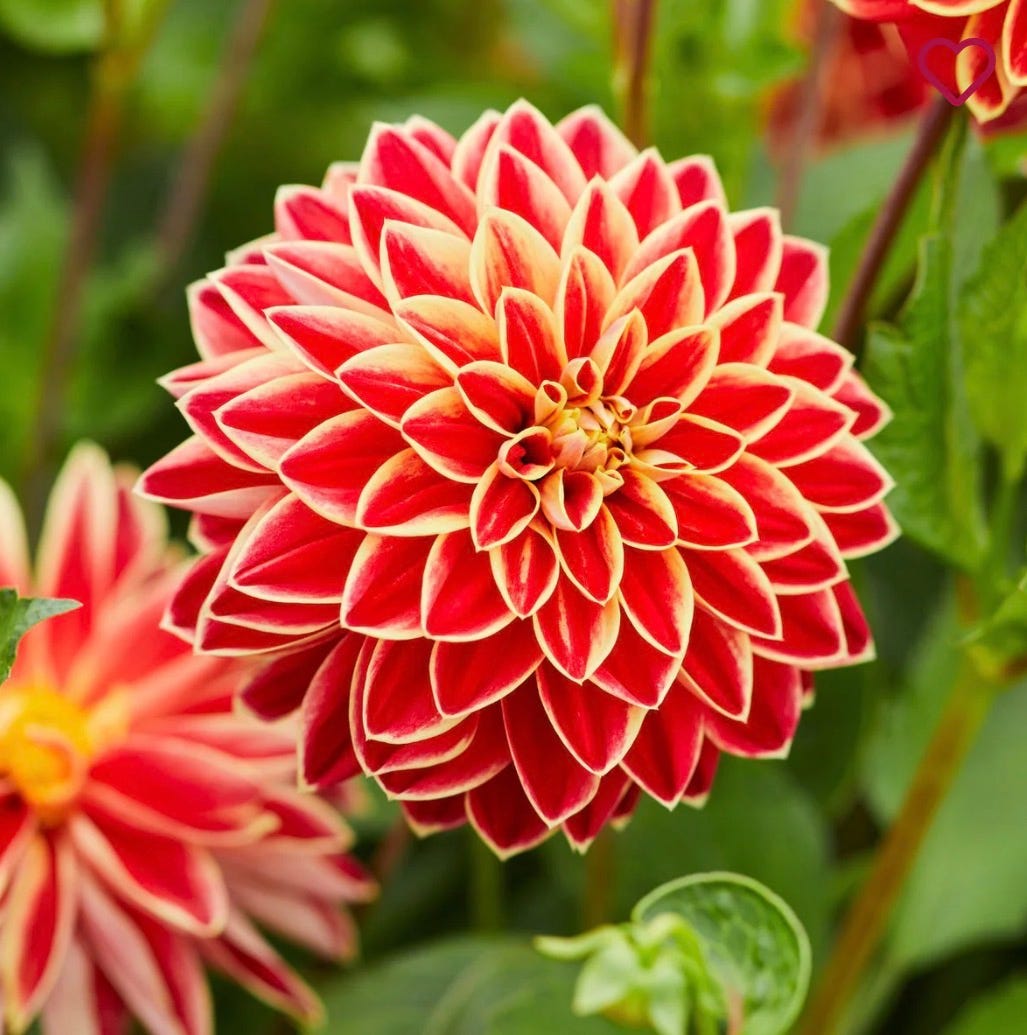
In their pots the dahlia tubers send bright green and purple shoots up from the soil. They lift the earth around them like a lid and emerge, triumphant. I get down on my knees close to them and say, “Look at you guys!” I count the ones I can see and imagine the ones that are just beneath the surface, waiting to break through. How many will there be? In late May, I’ll carry them outside and let them get used to the weather and the wind. I don’t know how long they’ll take to bloom. My neighbor and I are calling it “Dahlia Experiment 2026.” If we’re lucky, we’ll see them explode into fireworks of color. Orange sherbet, fuchsia cream, chocolate black. Petals on petals on petals, an infinitude of geometry, world-shaped and dish-shaped, fragile but forgiving.
Such a strong theme of hope. We need that now. So wonderful that the children experienced Artemis II. They will remember that like my generation remembers the moon landing.
Perhaps spring will be all the more glorious after such an unforgiving winter. You paint such beautiful pictures of color…and hope. ❤️